Human Action for Planet Action
Planet Action was organized by MIT as part of TEDx Boston with the aim of fostering collaboration and innovation in developing solutions to address rising global temperatures and erratic weather patterns, which challenge human coping strategies. The event was notable by its well-structured format and provided valuable insights, attracting entrepreneurs, policymakers, scientists, and students who expressed optimism that rigorously researched actions can enhance adaptation and resilience to climate change. The initial step for individuals from diverse backgrounds is to acknowledge the reality of climate change, compounded by unsustainable resource extraction practices by humans. Furthermore, effectively mitigating and reversing its effects requires coordinated efforts across all sectors of society.
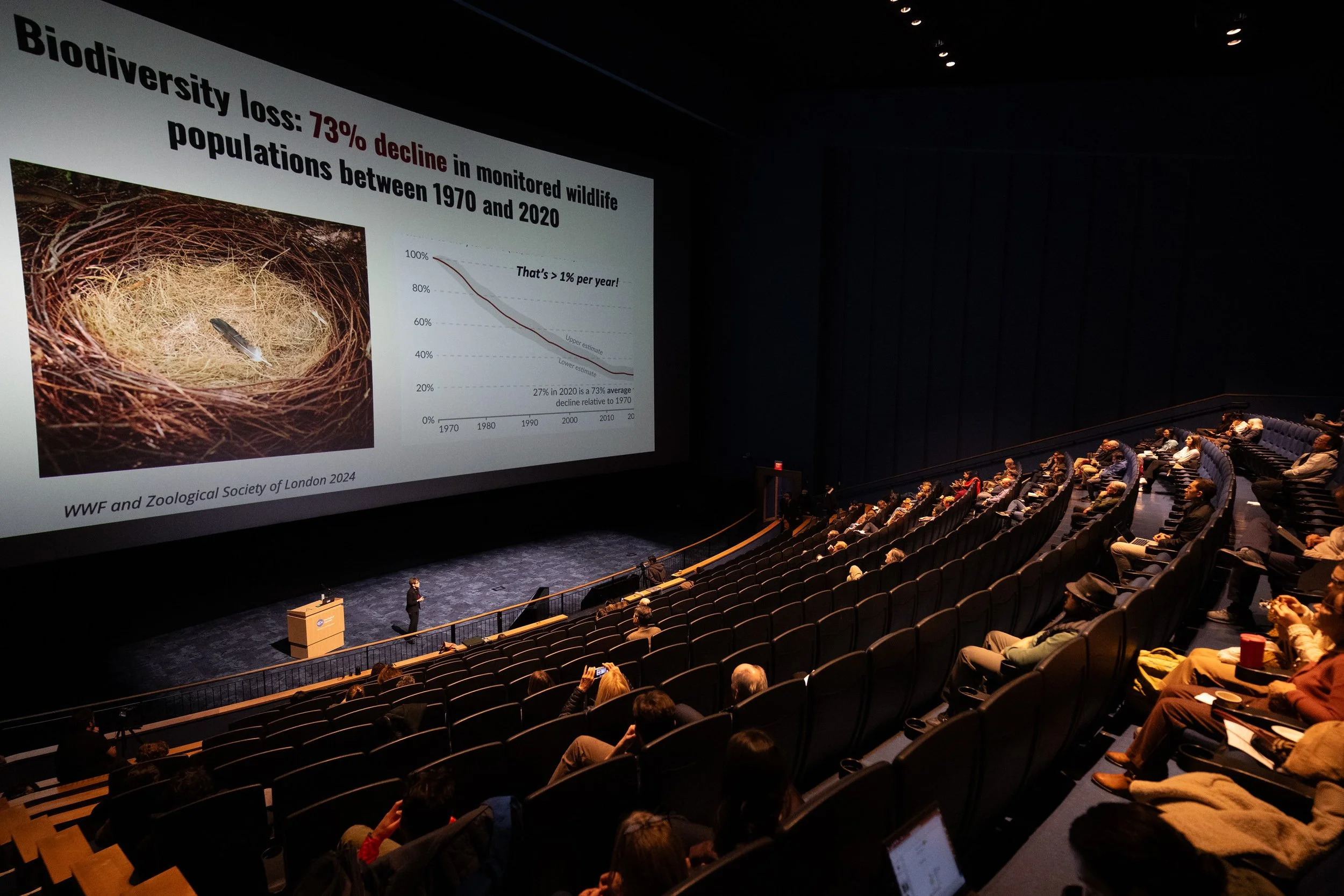
With this in mind, let’s explore some of the proposed solutions. The main discussions focused on safeguarding biodiversity, enhancing connected conservation, ensuring water resilience, improving soil health, and supporting future food systems. Rebecca Shaw from the World Wildlife Fund cited a 73% decline in biodiversity over the past five decades, highlighting that each year, $7 trillion in investments impacts $58 trillion worth of biodiversity. So, what can be done? Solutions can involve both small steps, major initiatives and targeted policies. For example, building overhead crossings on busy highways can help maintain migration routes and walking paths for animals such as bears, moose, and the Florida panther.
Humans have long viewed themselves as superior to other species. Kinari Webb suggested that laws should be created to grant animals rights same those of humans.
On the topic of living soils block, it was highlighted that food systems contribute to one-third of global soil desertification. Agam Khare, Founder & CEO of Absolute, leads a top AI robotics company in India. His solution involves studying the micro profile of soils and restoring them to their original state by reintroducing micro-organisms that were lost due to intensive agricultural practices. He has successfully restored 3% of degraded soils in India, around Bihar and Uttarakhand region, improving soil fertility and benefiting local farmers and leading the biggest regenerative agriculture practice.
Similarly, Peter Byck, a professor from Arizona State University, has developed a different approach. His solution is based on regenerative grazing, which involves dividing pastures into blocks and rotating herds through these areas to give grass time to regenerate. Byck’s experiments have resulted in significant improvements in biodiversity populations as well as increased grass production.
Trees play a crucial role not only in recycling atmospheric carbon but also in regulating global rainfall patterns, as explained by Erica Gies, an author and environmental journalist at National Geographic. Rainforests in Brazil and Indonesia influence weather patterns worldwide, affecting people even in the Americas. Gator Halpern is working to restore degraded coral reefs by cultivating them in laboratories and reintroducing them into the ocean to support their growth. Nelson Vadassery offers innovative solutions such as converting seaweed into fuel.
Feed the Future is a vital topic as we work to transform agriculture. The presentations offered fresh perspectives and innovative ideas. Paul Newnham highlighted that although there are around 30,000 edible plants worldwide, the agriculture industry relies on just four main crops, which negatively affects our planet's health. He also noted that poor diets result in 15 million deaths annually. Addressing these challenges is complex and solutions are not easily scalable. However, beans offer promise; they are affordable, packed with nutrients, and help restore the climate. Embracing beans could usher in an era of diverse diets.
Adriana Craciun of Boston University described the Arctic City Seed Vault, which houses a substantial collection of seeds from around the world. Globally, there are approximately 2,000 seed banks of varying sizes. The Seed Vault serves as a symbol of international collaboration and highlights our collective ability to safeguard the planet for future generations. Notably, research indicates that seeds preserved under frost for 30,000 years have been successfully regenerated.
Christine Gould's organization, GIGA, is dedicated to leveraging technology to address global food demand. Their approach includes modernizing traditional agricultural practices, converting organic waste into manure with the help of worms, and utilizing artificial intelligence to create tailored recipes for restoring specific soil types. Danny McCubbin's initiative, The Good Kitchen Sicily, focuses on repurposing surplus food to provide freshly prepared meals to individuals in need.
Nathan Kleinman, Co-director of Experimental Farm Network, highlighted that perennial crops like perennial wheat could provide valuable solutions to agricultural problems. Farmers are directly impacted by climate change and often notice its effects first. The prevalence of monoculture farming practices has played a role in creating these issues; thus, we are not just affected by climate change but also contribute to it. Advances in plant breeding are an essential approach to tackle some of the environmental challenges.
In summary, the fundamental solution rests with society; individuals have the power to initiate meaningful change by modifying their behaviors, choices, and demands. Transformations in demand-side markets influence shifts on the supply side, as consumer preferences evolve—particularly regarding high carbon intensive products—the resulting adjustment of equilibrium prices will prompt significant market shifts. As companies operate with profit motives, abrupt cessation is generally impractical; instead, progress occurs through incentive structures or legal requirements. Next substantial change must come from revamping of policy landscape. Ultimately, corporations adapt in response to evolving demands from both regulatory frameworks and consumers.
Education serves as the third most significant driver. Using mediums such as mass media and educational institutions, broad audiences are informed about the tangible nature of these issues—a top-down approach. Conversely, innovative carbon mitigating solutions can also emerge from grassroots initiatives—a bottom-up perspective. Ultimately, broad awareness is essential for achieving meaningful scale.
Finally, there are already outstanding scientists, engineers, system architects, biochemists, and many other professionals leading the way as true trailblazers for change. Significant contributions also come from emerging entrepreneurs who are introducing new products to replace carbon-intensive ones and shift current paradigms. Each individual solution plays an important role in contributing to meaningful change on a larger scale. The speed of progress will depend on how effectively all sectors collaborate within our economies solving one goal of running every business sustainably. We all hope that progress continues swiftly so we can preserve our planet's resources for future generations.
By: - Jaspreet Aulakh (Natural Resource Economist, aspiring Carbon Economist)